


When a project is in trouble, the first thing some operators do is blame the contractor.
Perceived causes
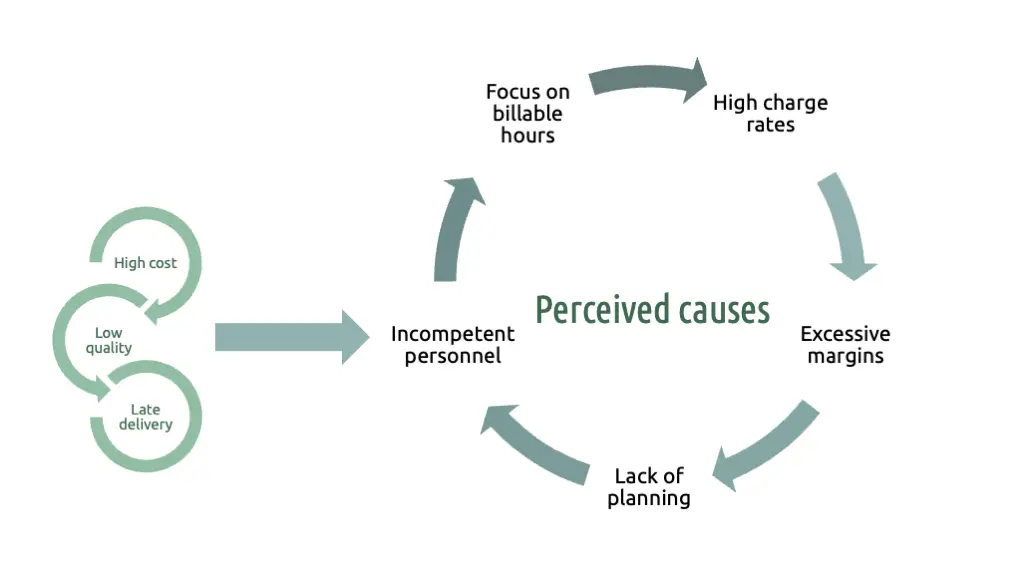
If a project is running late, has issues with build quality or is experiencing cost overruns, operators often jump to a familiar set of perceived causes:[1]
- Costs are overrunning because the contractor’s rates are too high;
- Rates are too high because the contractor is making unreasonable margins;
- The contractor is running late because it has not planned the work properly;
- The contractor is delivering poor quality because its people are incompetent; or
- The contractor is deliberately working slowly to maximise billable hours.
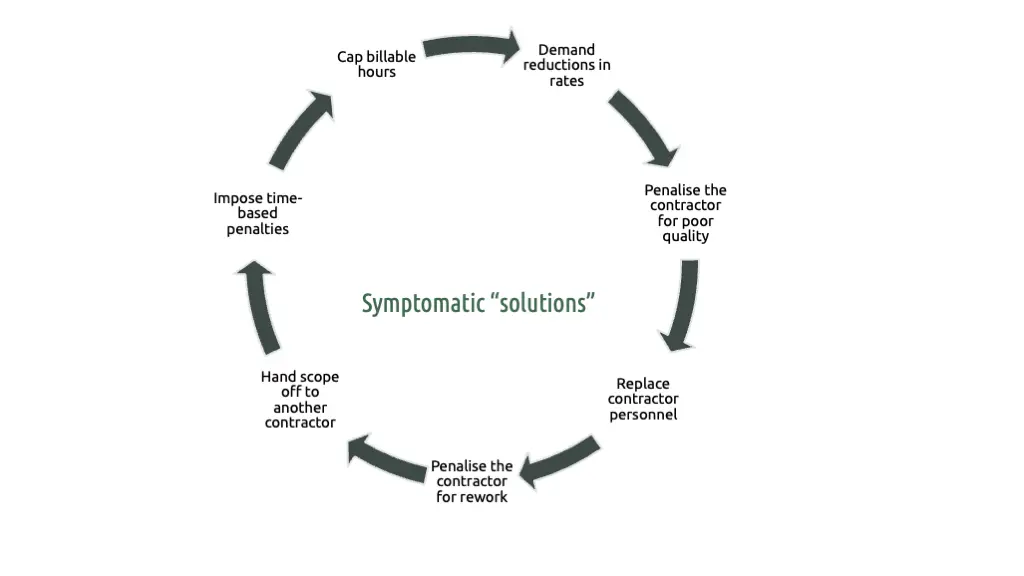
A focus on perceived causes leads the operator to impose a set of symptomatic solutions:
- Force the contractor to reduce its charge rates;
- Demand the contractor replace “non-performing” personnel;
- Impose penalties for delay and poor quality and refuse to pay for rework; or
- Cap reimbursement for billable hours.
Symptomatic solutions
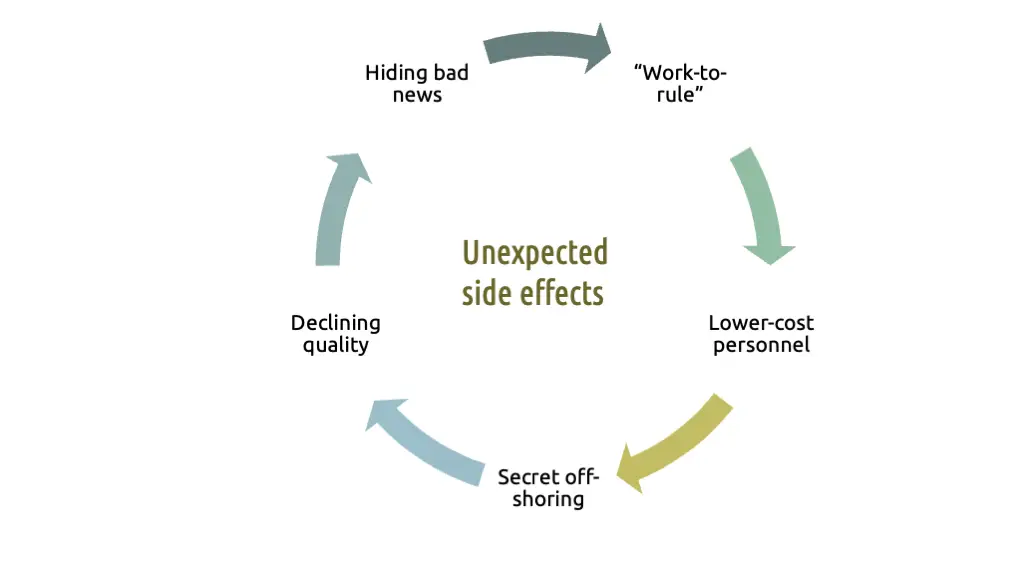
Symptomatic solutions generate unexpected side effects:
- Contractor “works-to-rule” and minimises non-essential services to preserve margins;
- Contractor replaces high-cost, high-performing personnel with lower-cost personnel at the same rates;
- Contractor subcontracts or offshores without telling the client;
- Quality declines; and
- Contractor hides bad news to avoid further penalties.
What all these things have in common is an attitude that responsibility for a troubled project should fall on the contractor.
Too often in the resources industry we see operators who refuse to acknowledge that they have a large part to play in the delivery of a successful project.
When operators adopt a blame and shame attitude to their contractor’s performance, they trap themselves in a vicious cycle of declining performance, further delay and expense, degraded quality and an increasingly poisoned relationship.
You cannot solve a problem by doing more of what caused it. You need to change the frame of reference.
Fundamental causes
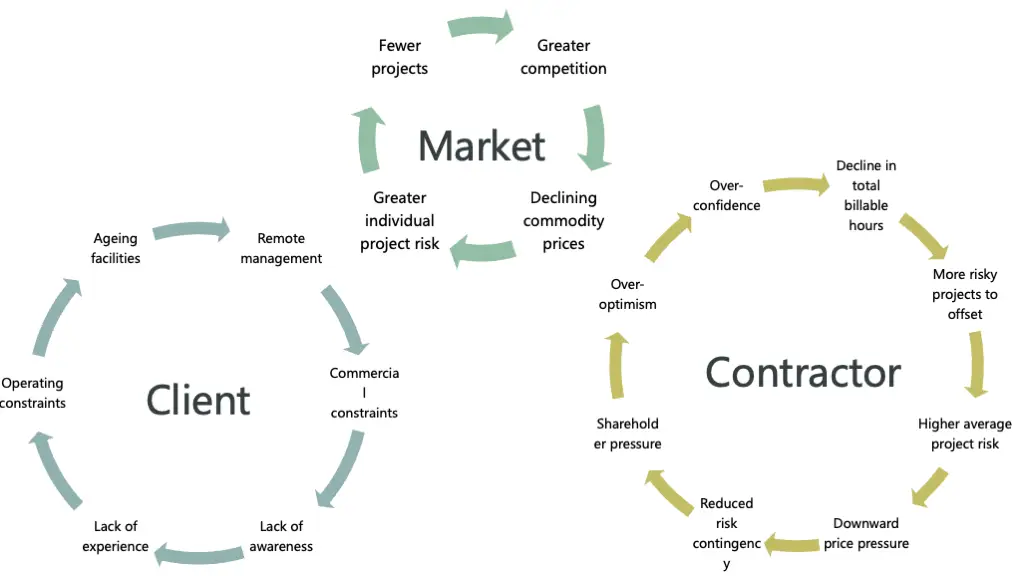
Both operators and contractors contribute to the success or failure of a project, but the fundamental causes of the problem are often not easy to see.
The actual problem is usually more complex in a declining market, and both contractor and client are affected.
The market has become more challenging:
- Fewer projects;
- Greater competition; and
- Greater individual project risk due to less well-defined scope.
The client’s understanding of and capacity to execute projects has deteriorated as more skilled and expensive personnel are let go. This results in:
- Poor scope definition;
- Slow turnaround on information requests, reviews and approvals;
- Limited understanding of the contractor’s pressures and needs;
- Less technical knowledge in-house, resulting in:
- Lack of awareness of technical risk;
- Failure to understand the complexities of the job;
- Downward price pressure from senior management.
- Lack of awareness of client’s own responsibilities in the relationship.
Contractors experience margin pressure and increased risk:
- Fewer projects mean reduced total billable hours against which to distribute fixed cost;
- Client focus on price means repeated forced rate reductions;
- Contractor is accepting higher-risk work to maintain income;
- Greater individual project risk means higher proportion of troubled projects to offset.
- Contractor is reducing profit margin or risk contingency in order to compete.
Actual problem
Recognising the more complex problem leads to a sensible conversation about the fundamental solution:
- Both parties need to acknowledge their responsibility;
- Both parties need to be open about their challenges and capability;
- Risk and reward should be fairly allocated and in line with market realities;
- Scope should be developed with appropriate expertise;
- Change and dispute resolution needs to be robust.
Fundamental solution
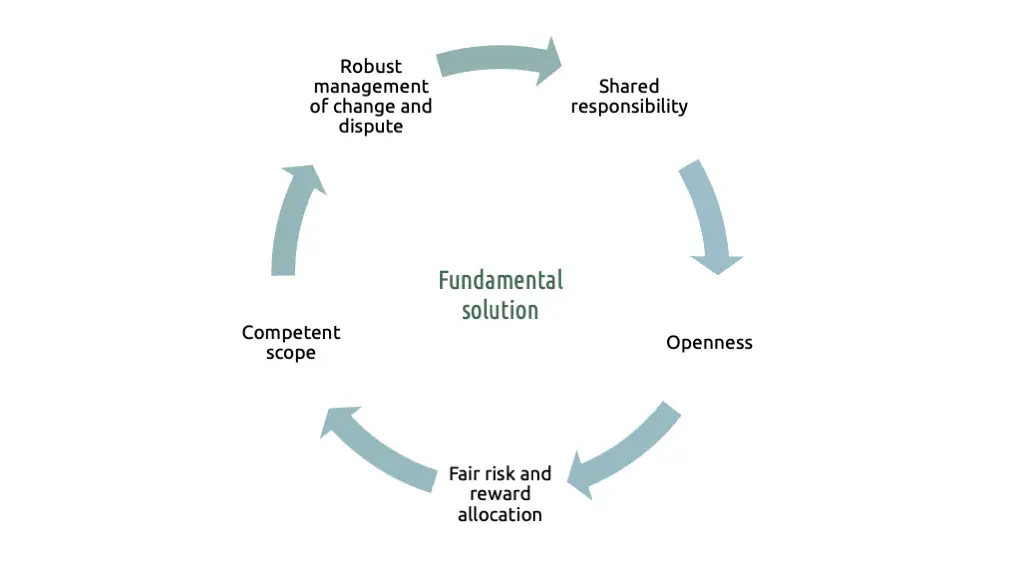
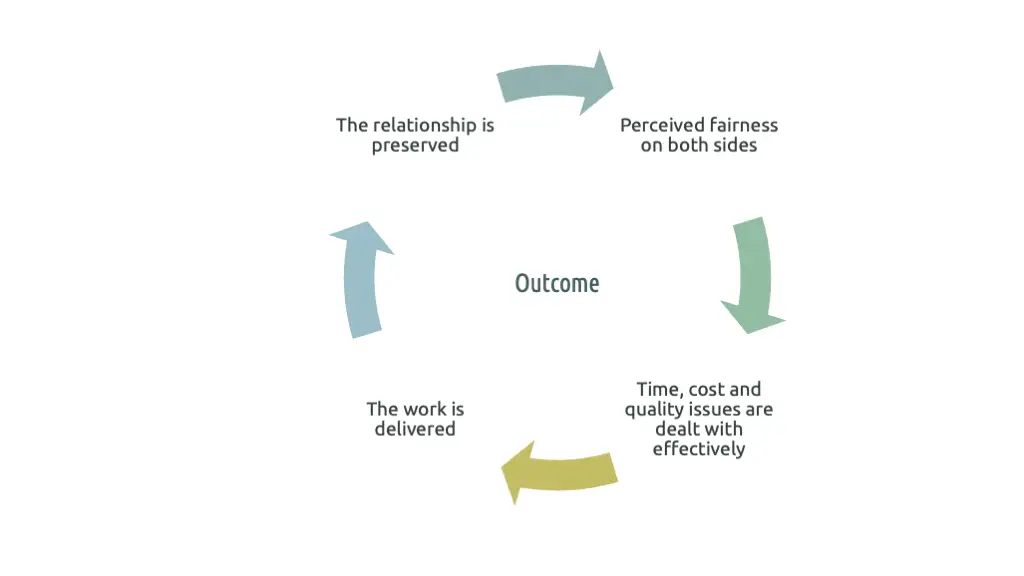
By focusing on the actual problem and the fundamental solution, a potential disaster can be turned around.
[1] For the origins of this concept, see Argyris, Chris, ‘Double Loop Learning in Organizations’ (1977) 55 *Harvard Business Review* 115.